Product Configurator & Tools
B2B Platform
Insurance / BFSI
0→1 Design
PPROJECT
MY ROLE
TIMELINE
November 2025 - Februray 2026
I OWNED
Discovery · Journey builder · White-labelling system
Overview
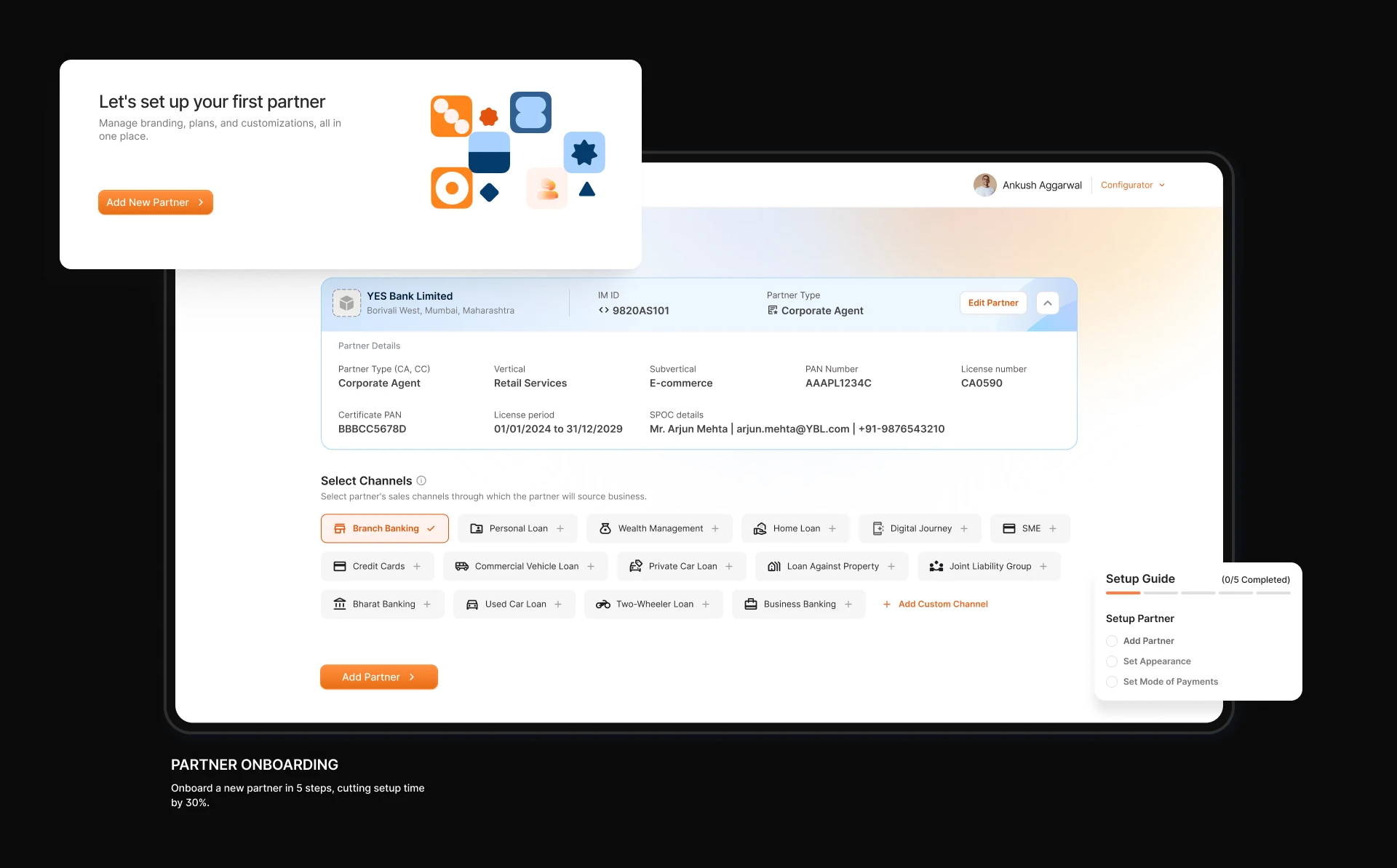
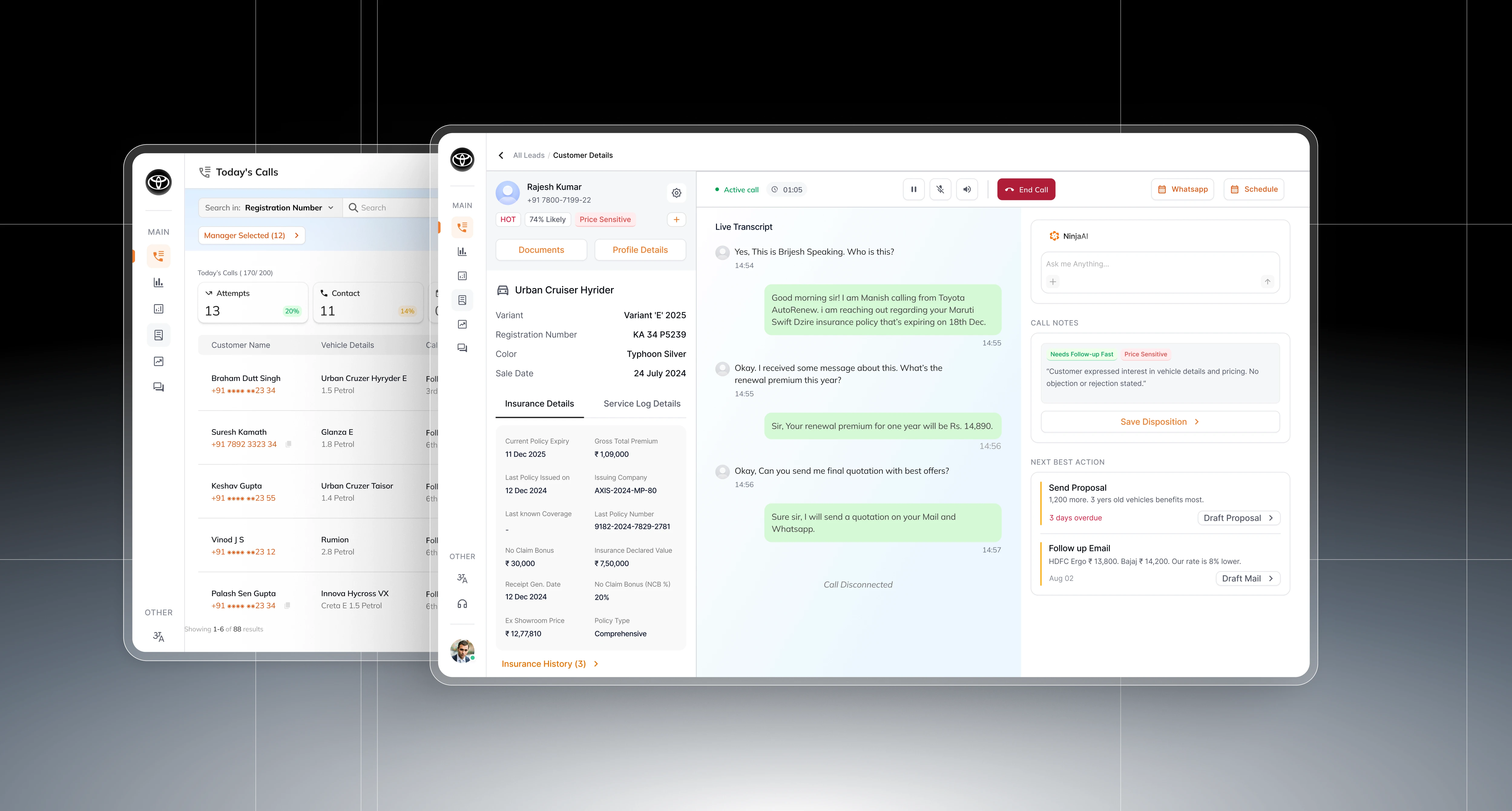
Banca Product Configurator is a no-code workflow automation tool that enables product admins to configure complex products without engineers or third-party tools. I led product design from concept to MVP launch, delivering a working prototype in just 80 days.
02 - CHALLENGES
Every new partner started from zero.
Bancassurance grew by adding partners, but each followed the same single path without branching. This meant ten partners required ten separate builds, with the tenth costing as much as the first.

~2 Months
to get a partner live
20 Days
to build a microsite
₹ 6L
average dev cost
Baselines relied on previous launches, but separate ownership of builds caused desynchronization and no unified system overview.
03 - REFRAMING CHALLENGE
Almost Built a Faster Microsite Builder…
The initial focus was on speeding up microsite creation, which took 20 days. The scoped solution could have cut this to 8 days.
However, it left the core model unchanged. Engineering would remain the bottleneck for products, journeys, payments, and integrations, optimizing just one small step in a longer process.

DESIGN CHALLENGE
How might we enable product teams to configure complex partner experiences without overwhelming them or relying on Engineering for every change?

04 - DISCOVERY
Requirements varied, but capabilities repeated.
Benchmarked against five products
Three direct competitors: TurtleMint, Riskcovry, SprintMoney and two indirect examples: Shopify and Wix.
The latter demonstrated thousands of non-technical users configuring complex storefronts without engineering support, validating the core premise.
Borrowed
Improved on
Avoided
05 - ARCHITECTURE
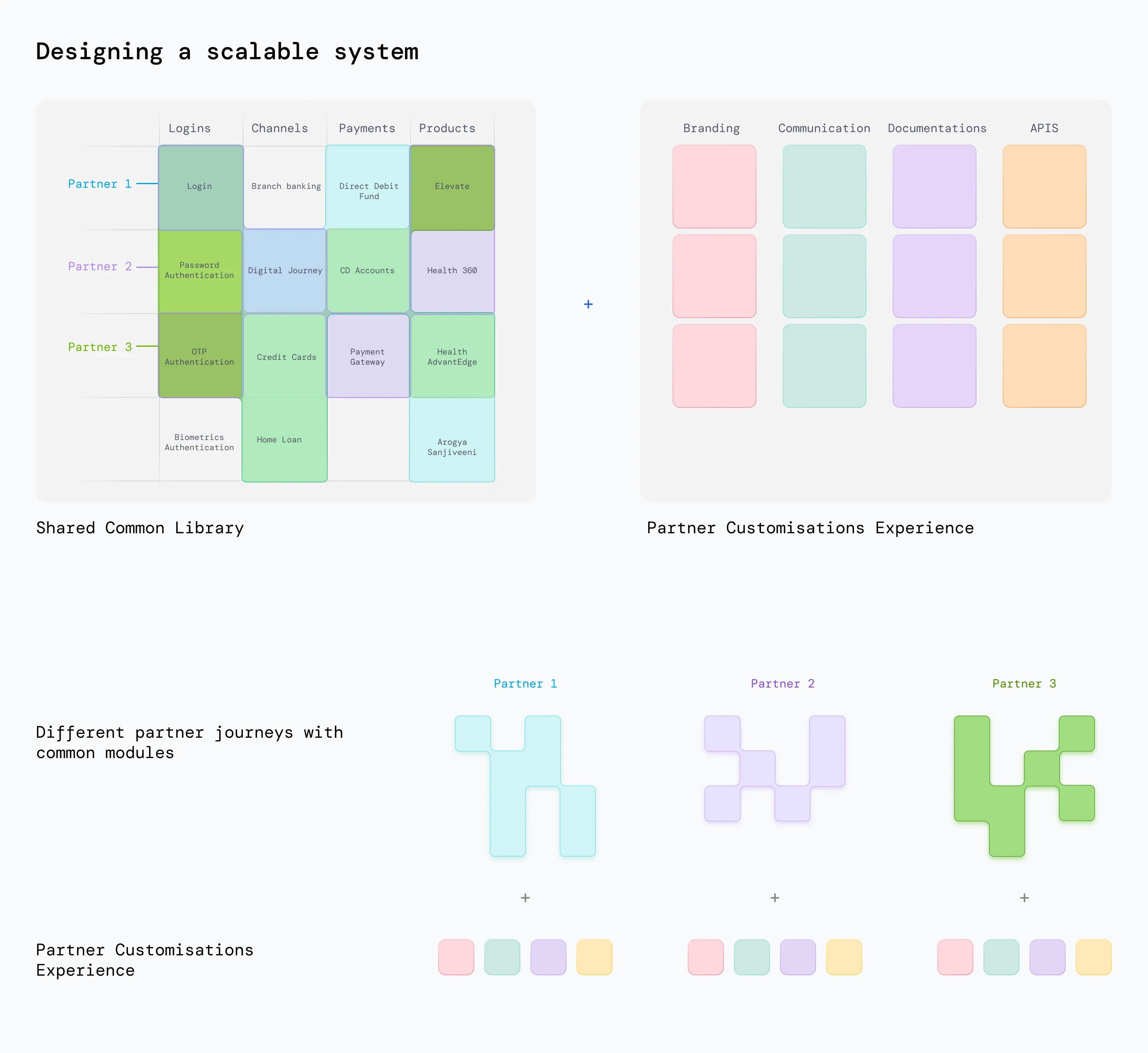
Configure once, reuse whenever possible, and override as needed.
The system keeps core functions intact while supporting partner-specific customizations.

06 - DEEP DIVE · JOURNEY BUILDER
Customise within boundaries.

What validation changed?
Testing wireframes with partners’ stakeholders, business teams, and engineering revealed my module scope was too narrow. The existing 19-build mapping showed what was built, not the full range of partner needs, customizations, or journey variations.
Solution: Instead of adding new modules, I broadened the scope and redesigned forms to support more input types, avoiding redirects back to engineering and better meeting platform goals.
07 - DECISIONS
Two calls worth defending.
08 - DESIGN FOCUS
Prioritize reusing patterns, not just components.
Adding modules piecemeal fragments the interface, as each brings its own layout, form logic, and "saved" state—leading to inconsistency before even addressing code fragmentation.
Patterns that scale

Progressive Configuration
Large setups broken into focused decisions.

Reusable form patterns
Consistent handling of fields and dependencies

Configuration States
Clear visibility into incomplete and completed setups.
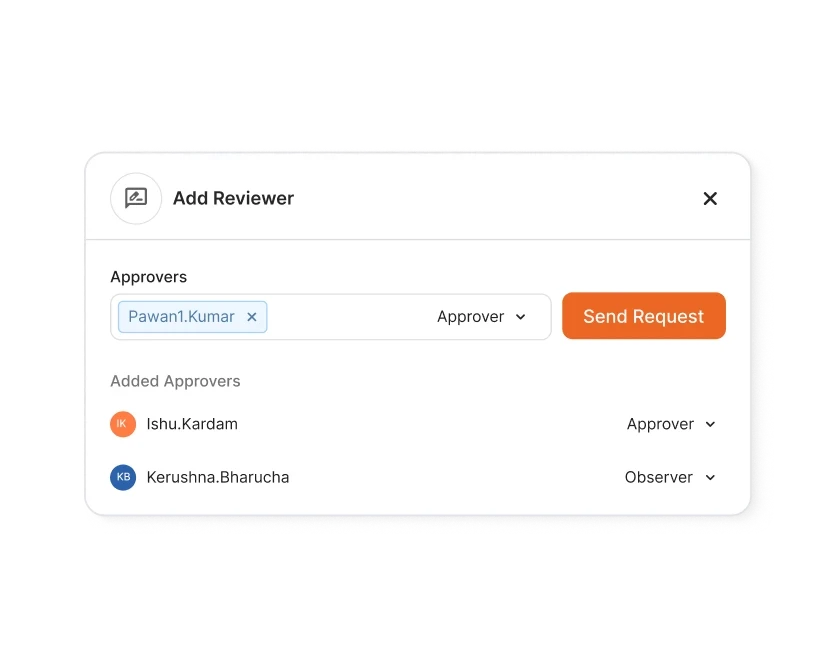
Review before action
Validate configurations before proceeeding